
The charger market got complicated. Here's how to cut through it.
A few years ago, buying a phone charger was simple. You grabbed whatever came in the box, plugged it in, and waited. Now the box is often empty, charging standards have multiplied, and the gap between a good charger and a bad one is measured in hours of your day.
If you're in Australia and trying to figure out which phone charger is actually worth buying in 2026 — whether you're replacing a dead cable, upgrading to something faster, or just tired of your phone sitting at 40% when you need it — this guide is for you.
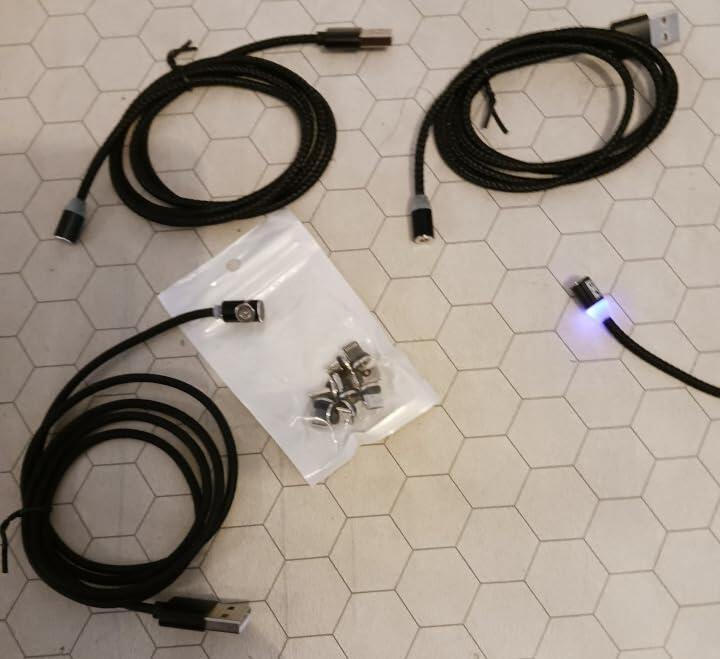
👉 Shop BIG+ 100W Magnetic USB-C Cables — Free Shipping Australia-wide
Why Your Charger Matters More Than You Think
Most people underestimate how much their charger affects daily life. A slow charger on a large battery can mean 2+ hours to reach full. A fast charger with the right cable can take you from 20% to 80% in under 30 minutes.
Speed aside, there's also safety, battery longevity, and compatibility to think about. A cheap, unregulated charger can degrade your battery faster, run hot, or cause damage. A quality charger communicates with your phone to deliver exactly the right amount of power — no more, no less.
Understanding Fast Charging: The Basics
Wattage: The Starting Point
Wattage (W) is the headline number on most chargers. A standard 5W charger is slow by modern standards. A 20W charger is solid for most phones. At 65W or higher, you're into genuinely rapid top-ups. But wattage alone doesn't tell the full story — your phone has to support the same charging standard as your charger for fast-charging speeds to actually kick in.
Fast Charging Standards: Why They Matter
USB Power Delivery (USB-PD) — The open standard developed by the USB Implementers Forum. Widely supported across Android phones, iPhones (from iPhone 8 onwards), iPads, and laptops. USB-PD can deliver up to 240W in its latest revision. If you want one charger that works across multiple devices, USB-PD is your safest bet.
Qualcomm Quick Charge (QC) — Found in many Android phones running Snapdragon processors. QC 4+ and QC 5 are also compatible with USB-PD, making them reasonably versatile.
Apple Fast Charging — Apple uses USB-PD for fast charging on iPhones and iPads. You need a USB-C to Lightning cable for older iPhones, or USB-C to USB-C for iPhone 15 and later.
Proprietary Standards (VOOC, SuperDart, etc.) — Brands like OPPO, realme, and Xiaomi have their own fast-charging systems that can hit extremely high wattages. These typically require the brand's own charger and cable to reach peak speeds.
What to Look for When Buying a Phone Charger in Australia
1. Compatibility With Your Device
Check what charging standard your phone supports. Buying a 65W charger for a phone that caps at 18W won't cause harm — it'll just charge at 18W. But buying a charger that doesn't support your phone's standard means you're leaving speed on the table.
2. Wattage That Matches Your Needs
| Device Type | Recommended Charger Wattage |
|---|---|
| Older smartphones | 10W–18W |
| Modern mid-range phones | 20W–33W |
| Flagship smartphones | 33W–65W |
| iPads and tablets | 20W–30W |
| Laptops | 45W–100W+ |
3. Cable Quality
A great charger paired with a poor cable is a bottleneck. For fast charging, you want USB-C to USB-C for most modern devices, or USB-C to Lightning for iPhones 14 and earlier. The cable must be rated for the wattage you're pushing — cables above 60W should have an e-marker chip.
👉 BIG+ 240W Magnetic USB-C Cable (2 Pack) — rated for maximum USB-PD speeds
👉 BIG+ 100W Magnetic USB-C Cable (2 Pack) — perfect for phones and tablets
4. GaN Technology
GaN (Gallium Nitride) lets chargers run significantly smaller and more efficiently than traditional silicon-based designs. A GaN charger at 65W can be roughly the size of a standard 20W charger from a few years ago. It runs cooler, wastes less energy, and is far more travel-friendly.
5. Number of Ports
Single-port chargers deliver maximum wattage to one device. Multi-port chargers split power across whatever's connected. Some smart GaN chargers detect which device needs the most power and allocate accordingly.
6. Safety Certifications
In Australia, chargers should meet local electrical safety standards. Cheap, uncertified chargers from unknown sources are a genuine risk — to your devices and your home.
Fast Charging Standards: Side-by-Side Comparison
| Standard | Max Speed | Compatibility | Cable Required |
|---|---|---|---|
| USB-PD 3.0 | Up to 100W | Universal (iPhone, Android, laptop) | USB-C to USB-C or USB-C to Lightning |
| USB-PD 3.1 | Up to 240W | Newer devices | USB-C to USB-C (rated cable) |
| Qualcomm QC 5 | Up to 100W | Snapdragon Android phones | USB-C to USB-C |
| Apple Fast Charge | Up to 27W (iPhone) | iPhones 8+ | USB-C to Lightning or USB-C to USB-C |
| OPPO VOOC/SuperVOOC | Up to 150W | OPPO, OnePlus devices | Proprietary cable |
| Xiaomi HyperCharge | Up to 120W | Xiaomi flagship devices | Proprietary cable |
Common Charger Mistakes Australians Make
Sticking with the charger that came in the box — If your phone came with a charger at all, it was often a basic 5W or 10W unit. Upgrading to even a 20W USB-PD charger can cut your charging time significantly.
Using USB-A when USB-C is available — USB-A to Lightning cables cannot fast charge iPhones. USB-A to USB-C cables are limited to around 18W. If you're still using USB-A with a modern phone, you're leaving a lot of speed behind.
Buying on price alone — A $6 charger that degrades your battery or fails within months isn't saving you money. Quality chargers cost more upfront but last longer and perform better.
Ignoring the cable — The cable is half the equation. A quality USB-C cable rated for high wattage makes a real difference to both speed and longevity.
How to Choose the Right Charger for Your Phone
iPhone 15 and later — USB-C to USB-C cable and a USB-PD charger at 20W or above. iPhone 15 Pro and Pro Max support up to 27W.
iPhone 14 and earlier — USB-C to Lightning cable and a USB-PD charger. These models support up to 20W fast charging.
Samsung Galaxy — A 25W–45W USB-PD or QC charger will fast charge most Galaxy phones. S-series flagships support up to 45W.
Google Pixel — USB-PD. A 30W USB-PD charger covers most models.
OPPO, realme, OnePlus — Their own chargers deliver peak speeds. Third-party USB-PD chargers work at 18W–33W depending on the model.
Which BIG+ Cable Should You Pair With Your Charger?
No matter how good your charger is, a poor cable will bottleneck your charging speed. Here's the right BIG+ cable for your setup:
- Phones and tablets (everyday use): BIG+ 100W Magnetic Cable (2 Pack)
- Laptops and power users: BIG+ 240W Magnetic Cable (2 Pack)
- Full home or family setup: BIG+ Magnetic Cable Family Pack
- Best value bundle: BIG+ Magnetic Cable Complete Pack
- Travel: BIG+ Magnetic Cable Travel Pack
Conclusion
The best phone charger for you depends on your device, your habits, and whether you need something for home, travel, or both. But the fundamentals don't change: USB-C, USB-PD support, GaN technology, and a cable that's actually up to the job.
Don't overthink it — but don't underspend either. A charger you'll use every day for years is worth getting right the first time.
👉 Shop BIG+ Magnetic USB-C Cables — Free Shipping Australia-wide, 30-day guarantee
0 comments